Pune, a haven for students from all streams, cultures and backgrounds is a city which can very well be classified as a melting pot. People of myriad nationalities from the nooks and corners of the world find home in this college town and Pune readily assimilates them in its culture. One such community is that from Tibet.
With an effort to become a part of the world culture, the Tibetan community in Pune is not only trying to propagate the cause for a free Tibet, but is also working to be a united, close knit group by preserving their identity amongst themselves. Small in number, the Tibetan community in the city comprises of 22 students, 5 or 6 of them working in call centres and approximately 100 of them selling sweaters. The energetic and smart lot of students here are a part of the large international foreign student commune the city is blessed with. There is only one minor aberration; most of them have been born and brought up in India. “I like to call myself a Tibetan Indian rather than a Tibetan refugee living in India”, says the 22 year old Tenzin Tselha. Thoughtful and endearing, Tenzin is pursuing a Masters Degree in English from Abeda Inamdar College and has been living in the city for the past 5 years. With both her mother and father in the Special Forces of the Army, she was born and brought up in the small, intimate Tibetan community in Ladakh away from the frenzy and wrath of the outside world. Educated at the Tibetan Children Village School (TCV) in Ladakh, one of the 14 TCV schools in the country, Tenzin wants to be a teacher like her mother and her sister. But more so, she wants to go back and teach in the Tibetan community. “I want to go back and work in the Tibetan society and teach at one of the TCV schools or at the Central School of Tibetans, where my sister is teaching now. The Central School for Tibetans comes under the Tibetan Government in Exile in India. TCV was set up by His Holiness, The Dalai Lama’s sister. You can find thriving Tibetan communities in Karnataka, Himachal Pradesh and Ladakh. After I finished 12th grade from Dharamshala, I thought of moving out. My sister was studying in Mumbai at that time and she told me about Pune and that it’s a good place to study further. I, then, moved here to study Arts.” says Tenzin.
Throwing more light on her experiences after moving to Pune from an absolutely secure and close knit Tibetan community in Ladakh, she said the transition was very extreme and the life here was starkly contrast to the life she was accustomed to. “There was just so much exposure when I came to Pune, it was difficult to handle initially. But one of the main issues was with landlords and people we lived under as tenants. They would try to cheat us, extort money from us. I had no clue about all this when I first came but by third year of college, I knew how things worked here”, says Tenzin. Following Tenzin’s thoughts, Sonam Gangsang, a 23 year old working at the Infosys BPO, retorts, “It’s when you hang out at random places that people tease you as “chink chau” and think we are from the North East or Nepal. But we don’t take it seriously. Food was a major problem for me. Despite of living in India all my life, I had never eaten Indian food before! We live in India, but as thorough Tibetans. Talking from the work perspective, working here in Pune has been great. My perception about Indians has completely changed. My colleagues are just like my Tibetan friends now.” After graduating from St. Francis College, Hyderabad, Sonam came to Pune to study and become a librarian but took up a job in a call centre later to support herself and her two young sisters of the nine daughters in her family! After her sisters become self reliant, Sonam plans to get back to teaching in Tibetan schools too. Recalling her life in Ladakh, it’s been 7 years that she has spent away from all the festival celebrations. She misses going to the monasteries the most.
Spending time with each other on Tibetan holidays or watching movies, going to malls is something these students always love. They celebrated their New Year, Losar, on 14th February where all of them got together in their traditional dresses, cleaned their houses, made Tibetan food like “Desil”, a type of rice and “Momos”. They offered their prayers to His Holiness, The Dalai Lama. The week before, they had a noodle eating ceremony at their friends place.
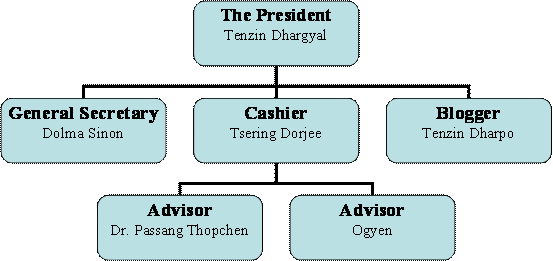
As we talk about the issue of an estranged Tibet and the struggle to have its independence, the community seems poignant and strongly poised to make itself heard albeit the distance that separates them from the country. The international organization, Students for Free Tibet (SFT) was started in Pune a year ago and the Tibetan Student Association (TSA) started in the city was inculcated into it. “SFT was founded in Canada in 1994. There are a lot of foreigners who are a part of this organization and a lot of them are from Bhutan. We try to do something all the time but its difficult to get permission from the commissioner. We try to meet every month, discuss issues, and talk about how we can inform people about Tibet. The TSA became a part of it since we didn’t have resources to run it properly.” says Tenzin, who is also the coordinator for SFT from Pune. They held several candle marches in 2008 and had a couple of film screenings and introductory sessions last year to inform people about their culture and its people. They also held a hunger strike outside Pune Station when the monks from the many monasteries in Karnataka had come for a visit.
Despite having a distinct belongingness to India, Tenzin, Sonam and their friends hope to go back to their nation and they hope it evolves into autonomy by then. While that would give them great pride, Tenzin is of the opinion that it will be best for Tibet and its people to go under China. “We lack infrastructure and engineering right now. Albeit being under China, I think we could still preserve our culture and individuality”
“You must have noticed that Tibetans are generally very shy people. We later realized that it’s not a good quality to possess” quips Sonam in her quiet, articulate manner. Anything but under confident, the Tibetan community stands firm on its feet as it passionately yearns for progress and taking it to their people. Having grown up in a secluded community that strongly holds on to its roots and despite of living in India all their life, these Tibetan students have their own share of trials but an equally high sense of self. They stand exactly for what today’s struggling Tibet wants to represent- unity, self reliance and a calm, peaceful strength.